
Hot Surface Igniter or Spark Igniter? What's the difference?
Posted by McCombs Supply on 20th May 2026
If you have a gas range oven, dryer, furnace, or boiler in your home, there’s a good chance it relies on an igniter to safely light the gas burner. But not all igniters work the same way. Two of the most common types are Hot Surface Igniters (HSI) and Spark Igniters — and understanding the difference can help you diagnose problems, maintain your appliance, and choose the correct replacement part.
Whether you’re a DIY homeowner or a service technician, this guide will break down how each igniter works, common symptoms of failure, and tips for handling igniters safely.
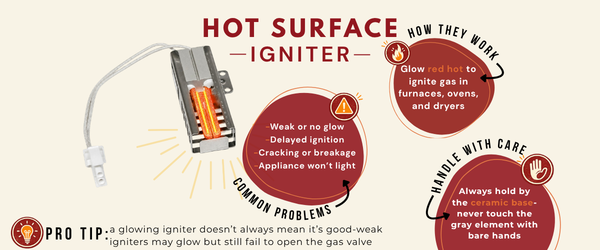
What Is a Hot Surface Igniter?
A Hot Surface Igniter is commonly found in:
- Gas furnaces
- Gas ovens
- Some gas dryers
- Commercial cooking equipment
Instead of creating a spark, this igniter works by heating up to an extremely high temperature — hot enough to ignite gas directly.
How A Hot Surface Igniter Works
When the appliance calls for heat:
- Electricity flows through the igniter
- The igniter begins to glow bright orange or yellow
- The gas valve opens
- The heated igniter lights the gas flame
Most hot surface igniters are made from either:
- Silicon carbide
- Silicon nitride
Silicon nitride igniters are generally more durable and resistant to cracking than older silicon carbide styles.
Common Hot Surface Igniter Problems
Hot surface igniters are one of the most common failure points in gas appliances.
Signs of a Bad Hot Surface Igniter
- Oven or furnace won’t light
- Igniter glows but burner never ignites
- Delayed ignition or “whoosh” sound
- Furnace cycles on and off repeatedly
- Weak or dim glow from the igniter
In many cases, the igniter may still glow even though it’s too weak to properly open the gas valve.
Important Handling Tip
Hot surface igniters are extremely fragile.
The heating element can easily crack from:
- Finger oils - your fingers have natural oil that causes a hotspot on the silicon carbide that will trap the oil and eventually cause the igniter to fail.
- Dropping or bumping the igniter
- Overtightening screws
- Touching the glowing surface - never touch the glowing surface of an igniter! It is HOT!!!!
When installing a hot surface igniter:
- Handle it by the ceramic base only and wear gloves as a safety precaution
- Avoid touching the gray igniter element
- Wear clean gloves if possible
- Never force it into position
Think of it like handling a light bulb filament — strong heat, but delicate material.
Buy Igniters in our Appliance & HVAC Parts Store:
Dryer Igniters | Range Oven Igniters | Furnace Igniters | Boiler - Water Heater Igniters
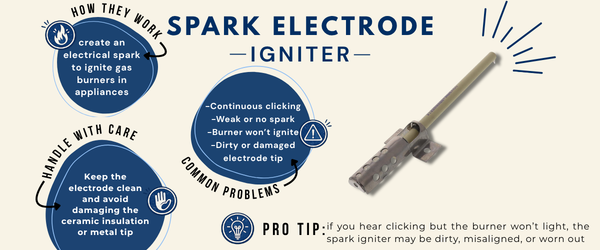
What Is a Spark Igniter?
A Spark Igniter works differently. Instead of glowing hot, it creates an electrical spark to ignite the gas.
These are commonly found on:
- Gas cooktops
- Gas grills
- Some ovens and ranges
- Commercial gas appliances
How a Spark Igniter Works
When the burner is turned on:
- The ignition module sends voltage to the spark electrode
- The igniter creates a visible spark
- The spark ignites the gas-air mixture
- The burner lights instantly
Spark ignition systems are very common on modern gas ranges because they provide quick ignition and eliminate the need for a standing pilot light.
Common Spark Igniter Problems
Spark ignition systems can develop issues over time due to grease, moisture, or worn components.
Signs of a Spark Igniter Problem
- Clicking sound but no flame
- Weak or inconsistent spark
- Burner lights slowly
- Continuous clicking after ignition
- No clicking at all
Sometimes the issue is not the igniter itself, but:
- A dirty burner cap
- Moisture around the electrode
- A faulty spark module
- Loose wiring
Cleaning the burner area and ensuring proper alignment can often solve ignition issues.
Quick Look at the Difference Between the Hot Surface Igniter and Spark Igniter
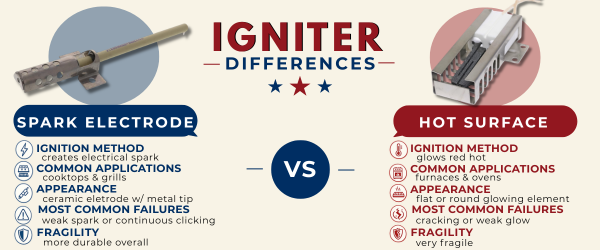
|
Feature |
Hot Spark Igniter HSI |
Spark Igniter |
|
Ignition Method |
Glows red hot |
Creates electrical spark |
|
Common Applications |
Furnaces & ovens |
Cooktops & grills |
|
Appearance |
Flat or round glowing element |
Ceramic electrode with metal tip |
|
Most Common Failure |
Cracking or weak glow |
Weak spark or continuous clicking |
|
Fragility |
Very fragile |
More durable overall |
Which Igniter Does Your Appliance Use?
It depends on the appliance type and manufacturer.
Common Examples
- Gas furnace → Usually hot surface igniter
- Gas oven bake burner → Often hot surface igniter
- Gas cooktop burners → Usually spark ignition
- Gas grill → Spark ignition
Always check:
- Your model number
- Existing part number
- Appliance manual
Using the wrong igniter can prevent proper operation or create unsafe ignition conditions.
Safety Tips When Replacing Igniters
Before servicing any gas appliance:
- Disconnect power
- Shut off the gas supply if necessary
- Allow components to cool completely
- Follow manufacturer instructions
If you smell gas or are unsure about repairs, contact a qualified technician.
Shop McCombsSupply.com for Replacement Igniters for Many Appliances
At McCombsSupply.com we stock a large selection of replacement igniters for:
- Gas ranges
- Oven
- Furnaces
- HVAC equipment
- Commercial cooking appliances
We carry many popular igniter styles and replacements from trusted manufacturers, including universal and OEM-style options designed to fit a wide variety of appliance brands and models.
Whether you need a hot surface igniter for a furnace or a spark igniter for a gas range, we can help you find the right replacement part to get your appliance back up and running.
View this post on Instagram
Final Thoughts
Hot surface igniters and spark igniters both serve the same purpose — safely igniting gas — but they do it in completely different ways. Knowing how they work, what symptoms to watch for, and how to handle them properly can help prevent costly repairs and unnecessary downtime.
If your appliance is having trouble lighting, the igniter is often one of the first components worth checking.
Buy Igniters in our Appliance & HVAC Parts Store:
Dryer Igniters | Range Oven Igniters | Furnace Igniters | Boiler - Water Heater Igniters